10 Signs Your Office Phone System is Hurting Employee Productivity
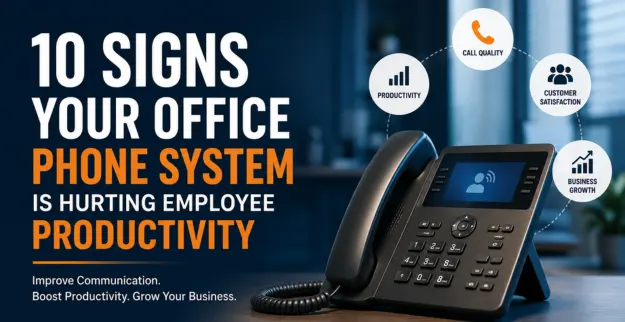
A solid office telephone system really matters, for smooth talking all across the business. If your current business phone system is kind of outdated, it might lower employee productivity, mess up customer service, and also slow down the day-to-day flow.
1. Regular Call Drops
- ♦ Employees spend valuable time reconnecting calls and repeating conversations.
- ♦ Important client discussions may be interrupted.
- ♦ Poor communication can lead to missed business opportunities.
2. Low Call Quality
- ♦ Echoes, background noise, and poor audio quality make communication difficult.
- ♦ Employees spend more time clarifying information.
- ♦ Customer satisfaction decreases due to poor call experiences.
3. Restricted Movement for Employees
- ♦ Employees can only answer calls from their desks.
- ♦ Remote and field staff become difficult to reach.
- ♦ Business communication slows when employees are away from their workstations.
4. No Call Forwarding Capabilities
- ♦ Calls remain unanswered when employees are unavailable.
- ♦ Customers become frustrated after repeated attempts.
- ♦ Important inquiries may be completely missed.
5. Incompatibility with Business Tools
- ♦ Employees switch between multiple applications manually.
- ♦ Accessing customer information during calls becomes difficult.
- ♦ Daily workflows become less efficient.
6. Challenging Conference Calls
- ♦ Team collaboration becomes difficult.
- ♦ Meeting setup takes longer than necessary.
- ♦ Communication delays affect project completion.
7. Poor System Performance
- ♦ Employees experience delays when making or receiving calls.
- ♦ Waiting for system responses wastes valuable time.
- ♦ Productivity decreases throughout the workday.
8. Requires Significant Maintenance
- ♦ Frequent technical issues interrupt business operations.
- ♦ IT teams spend excessive time resolving phone-related problems.
- ♦ Employees regularly face communication disruptions.
9. No Advanced Reporting Features
- ♦ Managers cannot effectively monitor call performance.
- ♦ Customer service improvement opportunities remain unidentified.
- ♦ Decision-making becomes less data-driven.
10. Increasing Costs of Communication
- ♦ Outdated systems often generate higher operational costs.
- ♦ Local and international communication becomes expensive.
- ♦ Businesses pay more without receiving additional features.
Benefits of Upgrading to Modern IP Phone Solutions
- ♦ Better call quality and reliable performance.
- ♦ Support for remote and hybrid work environments.
- ♦ Advanced call forwarding and routing capabilities.
- ♦ Integration with CRM and business applications.
- ♦ Improved collaboration through conference calling.
- ♦ Reduced maintenance requirements.
- ♦ Enhanced reporting and monitoring.
- ♦ Better customer service experience.
- ♦ Scalable for growing businesses.
- ♦ Lower long-term communication costs.
What Happens When You Ignore the Problem?
1. Reduced Employee Productivity
Employees lose valuable time dealing with phone-related issues.
2. Missed Customer Calls
Important customer inquiries may go unanswered.
3. Poor Communication
Teams experience delays in sharing information.
4. Higher Business Costs
Legacy systems require ongoing repairs and maintenance.
5. Customer Dissatisfaction
Poor call experiences can lead to unhappy customers.
Limitations of Outdated Phone Systems
1. Poor Call Quality
Calls may contain noise, echo, or interruptions.
2. Limited Features
Modern capabilities such as call forwarding may be unavailable.
3. Difficult to Expand
Adding new users or extensions is often challenging.
4. Frequent Technical Problems
The system may experience recurring failures.
5. No Remote Work Support
Employees cannot conveniently make or receive business calls from anywhere.
Conclusion
An outdated Office Telephone System can really mess with productivity, customer satisfaction and overall business efficiency. Upgrading to modern IP Phone Solutions in Dubai can help organizations improve how they connect, cut down on costs, and better support future expansion.