Introduction
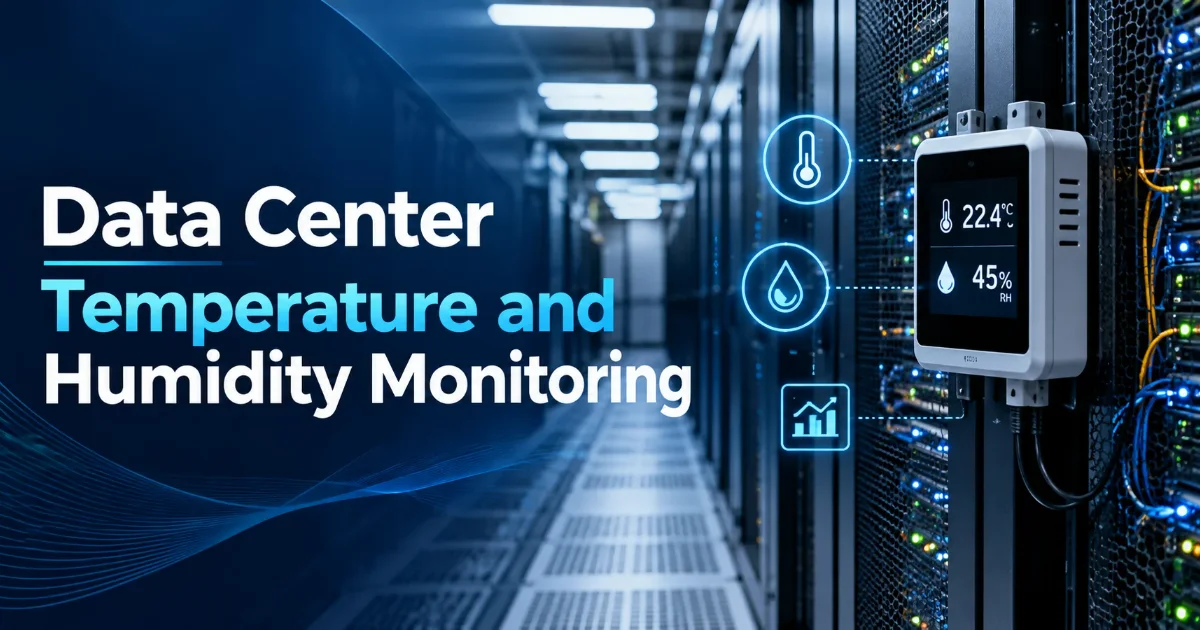
Data center temperature and humidity monitoring helps protect servers, networking devices, and critical IT equipment from environmental damage. It helps businesses identify potential problems early and maintain reliable IT operations.
Why Environmental Monitoring Matters
- ♦ Prevents overheating: Keeps servers within recommended temperature ranges.
- ♦ Protects equipment: Reduces the risk of hardware damage caused by heat and moisture.
- ♦ Improves performance: Helps maintain stable server and network operations.
- ♦ Reduces downtime: Identifies environmental issues before they cause system failures.
- ♦ Supports business continuity: Helps protect important business data and applications.
Data Center Temperature and Humidity Monitoring
1. Temperature Monitoring
- ♦ Tracks temperature levels around servers and IT equipment.
- ♦ Identifies hot spots that may cause overheating.
- ♦ Helps maintain suitable operating conditions for server hardware.
2. Humidity Monitoring
- ♦ Measures moisture levels in the server room.
- ♦ Helps reduce static electricity risks caused by excessively dry air.
- ♦ Detects excessive humidity that may contribute to condensation and corrosion.
3. Real-Time Environmental Monitoring
- ♦ Collects temperature and humidity readings continuously.
- ♦ Provides a clear view of server room environmental conditions.
- ♦ Helps IT teams identify unusual changes before they become serious problems.
4. Sensor Placement
- ♦ Places sensors near server racks and equipment air intakes.
- ♦ Monitors hot and cold aisles to identify temperature differences.
- ♦ Uses multiple sensors in larger server rooms for better coverage.
5. Automated Alerts and Notifications
- ♦ Sends alerts when temperature or humidity exceeds configured limits.
- ♦ Notifies IT teams through email, SMS, or monitoring dashboards.
- ♦ Helps support teams respond quickly to environmental risks.
6. Historical Data and Reporting
- ♦ Records environmental readings over time.
- ♦ Identifies recurring hot spots and humidity fluctuations.
- ♦ Helps businesses plan cooling improvements and preventive maintenance.
Recommended Monitoring Approach
- ♦ Install suitable temperature and humidity sensors in critical areas.
- ♦ Configure alerts based on equipment requirements and manufacturer recommendations.
- ♦ Monitor server rooms continuously, including outside business hours.
- ♦ Review environmental reports regularly to identify recurring issues.
- ♦ Test sensors and alert notifications periodically.
- ♦ Integrate environmental monitoring with existing IT infrastructure monitoring where possible.
Alerts That Impact Servers and How to Solve Them
| Alert | Possible Impact | Recommended Solution |
|---|---|---|
| High Temperature | Server overheating and reduced performance | Check cooling systems, airflow, and blocked vents. |
| Low Temperature | Equipment operating outside recommended conditions | Verify room temperature controls and sensor readings. |
| High Humidity | Condensation and possible corrosion | Inspect cooling and dehumidification systems. |
| Low Humidity | Increased static electricity risk | Check humidity controls and use appropriate humidification. |
| Cooling System Failure | Rapid temperature increase | Inspect cooling equipment and activate backup cooling if available. |
| Sensor Failure | Incorrect or missing environmental readings | Check sensor connections, power, calibration, and replacement needs. |
Monitoring Systems: Types
- ♦ Temperature and Humidity Sensors: Measure environmental conditions around server racks.
- ♦ Rack-Based Monitoring Systems: Monitor conditions at individual server racks.
- ♦ Centralized Monitoring Platforms: Display readings from multiple sensors through a single dashboard.
- ♦ Data Center Infrastructure Management (DCIM): Combines environmental monitoring with information about IT equipment and infrastructure.
- ♦ Building Management System (BMS) Integration: Connects environmental monitoring with building cooling and facility management systems.
Use Cases
- ♦ Construction Companies: Protect servers supporting project management, drawings, and document storage.
- ♦ Contracting Companies: Maintain reliable IT systems used for project coordination and business operations.
- ♦ Interior Design Companies: Protect systems storing design files, 3D models, and client documents.
- ♦ Facility Management Centers: Monitor server rooms and IT infrastructure supporting building operations.
- ♦ Consulting Companies: Protect business applications, databases, and confidential client information.
Conclusion
Data center temperature and humidity monitoring helps businesses protect critical IT equipment, reduce environmental risks, and maintain reliable operations. Regular monitoring, timely alerts, and preventive maintenance are essential for a stable server room.