How to Build a 3-2-1 Backup Strategy for Your Business
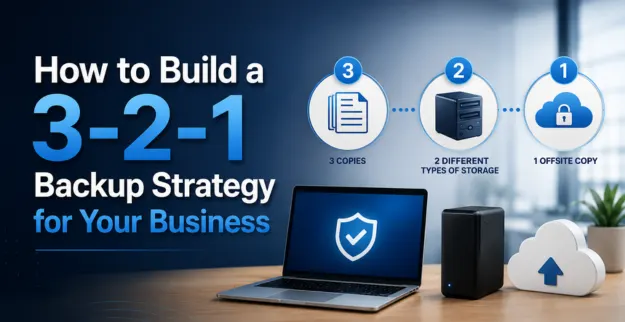
Data loss, cyberattacks, and hardware failures can throw off business operations at any time, like totally out of nowhere. Having a good 3-2-1 backup approach really helps organizations safeguard their important data and also make disaster recovery faster when those unexpected incidents finally show up.
What is the 3-2-1 Rule?
The 3-2-1 backup rule is basically about keeping three copies of your data, putting those copies on two different kinds of storage, and holding one copy somewhere offsite. It is, honestly, one of the most solid data backups and disaster recovery methods for businesses, especially when you need something that’s not too complicated but still reliable.
How to Build a 3-2-1 Backup Strategy for Your Business
1. Finding Key Business Information
- ♦ Identify all significant records (e.g., files) and records (e.g., databases) and programs (i.e., software), as well as project documentation.
- ♦ Rank the importance of the items identified for daily operations.
- ♦ Develop a backup plan according to the importance of each item.
2. Keeping 3 Copies of Same Data
- ♦ Maintain the original (source) data at the production site.
- ♦ Develop a copy of the data you will keep close by for speedy recovery.
- ♦ Develop a separate copy of the data you will use for storage and extended protection.
3. Utilize Two Distinct Storage Types
- ♦ Use both local and cloud-based storage solutions.
- ♦ Decrease the chance of losing data due to hardware or software failures.
- ♦ Enhance overall back-up reliability of data.
4. Automate Back Up Processes
- ♦ Use scheduled auto backs ups to remove human involvement.
- ♦ Make sure backs ups run as scheduled with no interruptions.
- ♦ Keep track of completion and successful backup processes.
5. Keep a Backup Offsite
- ♦ Have an additional backup copy in an alternate location.
- ♦ Protect your data from events such as fire, theft, floods, and other disaster-related incidents.
- ♦ This will increase your ability to recover from a disaster.
6. Test And Review Your Backups
- ♦ Make sure to perform recovery tests on all of your backups to ensure the integrity of those backups.
- ♦ Update your backup policy regularly as the company grows.
- ♦ You need to make sure that the recovery time for your backups falls within the operational requirements of your business.
Storage Types
| Storage Type | Benefits |
|---|---|
| Local NAS Storage | Fast backup and recovery |
| External Hard Drives | Cost-effective backup option |
| Cloud Storage | Remote access and scalability |
| Backup Servers | Centralized data protection |
| Hybrid Storage | Combines local and cloud advantages |
| Tape Storage | Long-term archival storage |
Off-Site Backup:
- ♦ Utilize secure cloud storage solutions for backing up data.
- ♦ Replicate backups in a second location.
- ♦ Safeguard against ransomware and other large-scale failures by backing up the same information at two locations.
- ♦ Maintain access to business-critical data in an emergency.
- ♦ Facilitate quick recovery from disasters and continue to operate after such events.
Conclusion:
Through a properly structured 3-2-1 backing up method -a well-structured three-two-one backup strategy, businesses will significantly limit outages, preserve high-value data, and ultimately improve disaster recovery procedures. Using a proper storage strategy will provide businesses with complete data protection, enabling them to continually achieve business continuity over time.