Introduction
Smart home solutions make daily life more comfortable, secure, and
energy-efficient. Proper planning helps you choose the right technology
and features for your home or property. Abiding Technical Services LLC
provides smart home solutions for security, convenience, and automation.
What Is a Smart Home System?
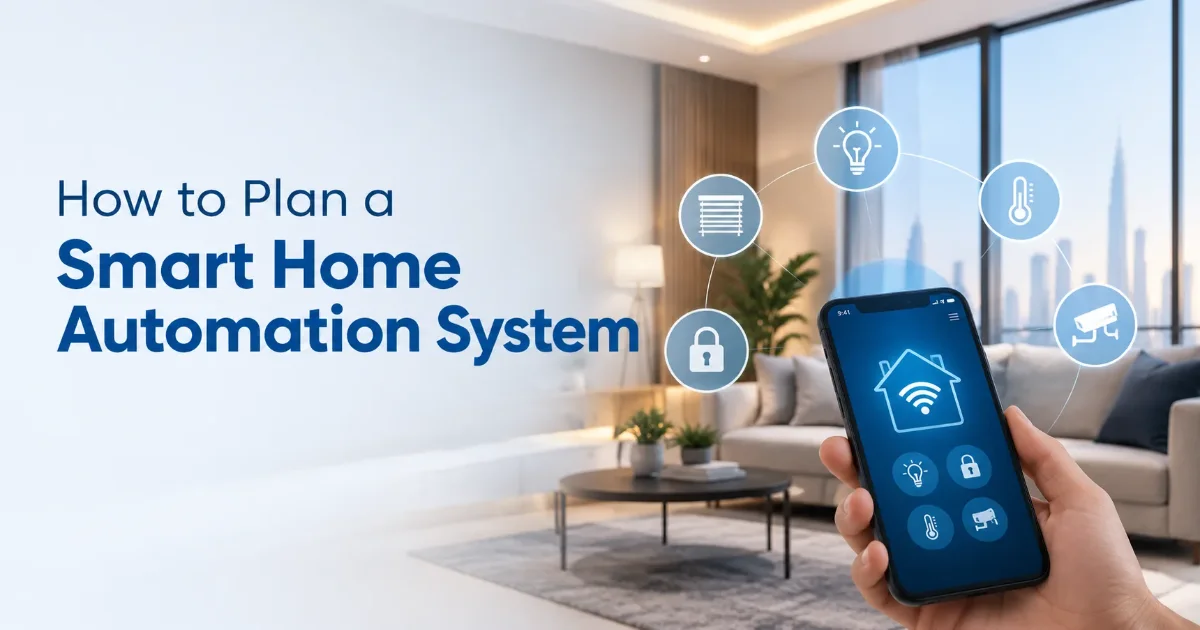
A smart home system connects devices such as lights, air conditioning,
door locks, sensors, and security cameras through a central control
system. You can manage these devices using a smartphone, voice assistant,
or scheduled automation. The right smart home services can improve
comfort, security, and energy management.
Smart Home Planning
1. Identify Your Requirements
♦ Identify the features you want to automate, such as lighting,
air conditioning, curtains, entertainment systems, and security.
♦ Set your priorities by starting with essential features and adding
more automation according to your budget and future needs.
2. Choose the Right Smart Devices
♦ Select compatible smart switches, sensors, cameras, and controllers
that work together within your chosen automation system.
♦ Compare available packages and deals on smart home services to find
suitable options for your requirements and budget.
3. Plan Your Network Connectivity
♦ Check Wi-Fi coverage throughout your property to ensure reliable
connectivity for all smart devices.
♦ Choose suitable technologies, such as Wi-Fi or Zigbee, according
to your devices and connectivity requirements.
4. Integrate Home Security
♦ Consider smart locks, motion sensors, video doorbells, and wireless
camera security solutions to monitor important areas.
♦ Explore suitable access control Dubai solutions to manage entry
permissions and improve property security.
5. Plan Lighting and Climate Control
♦ Automate lighting using smart switches, dimmers, and motion sensors
based on occupancy, schedules, and personal preferences.
♦ Integrate compatible air conditioning controllers and thermostats
to maintain comfortable temperatures and reduce unnecessary energy use.
6. Set a Realistic Budget
♦ Estimate the costs of devices, wiring, network upgrades, installation,
configuration, and ongoing maintenance.
♦ Choose a scalable system that allows you to add new devices and
features without replacing the entire setup.
7. Work with IT and Automation Experts
♦ Arrange professional installation to assess your property, select
compatible devices, and configure the system correctly.
♦ Test device connectivity, mobile app controls, automation schedules,
and security settings before using the system regularly.
Planning Considerations
♦ Property size: Plan device placement and network coverage according
to your property's layout.
♦ Compatibility: Ensure all devices work with your selected
automation platform.
♦ Cybersecurity: Use strong passwords, secure Wi-Fi, updated firmware,
and multi-factor authentication where available.
♦ Privacy: Review camera permissions, data storage, and monitoring
requirements.
♦ Power supply: Consider backup power for essential networking and
security equipment.
♦ Maintenance: Plan regular updates, troubleshooting, and technical
support.
♦ Future upgrades: Choose a system that supports additional devices
and automation features.
Problems and Solutions
| Common Problem |
Practical Solution |
| Weak Wi-Fi signals |
Improve coverage with suitable access points or mesh Wi-Fi systems. |
| Device compatibility issues |
Check compatibility before purchasing and installing devices. |
| High installation costs |
Prioritise essential features and expand the system in stages. |
| Security vulnerabilities |
Use strong passwords, firmware updates, and secure network settings. |
| Devices stop responding |
Check connectivity, power supply, and device configuration. |
| Difficult system management |
Choose a user-friendly control platform and arrange professional setup. |
Use Cases of Smart Home Automation
♦ Residential properties: Control lighting, air conditioning, curtains,
and door locks using a smartphone.
♦ Villas and apartments: Monitor entry points with smart locks, sensors,
and wireless security cameras.
♦ Construction companies: Plan smart home infrastructure during the
design and construction stages.
♦ Interior design companies: Integrate automated lighting, curtains,
and entertainment controls into modern interiors.
♦ Facility management: Automate selected systems and support routine
operations across suitable residential and commercial properties.
♦ Consulting companies: Recommend compatible automation technologies
that meet clients' functional and budget requirements.
Conclusion
Planning a smart home automation system starts with understanding your
needs, choosing compatible devices, and ensuring reliable connectivity
and security. A well-designed system can improve convenience, support
energy efficiency, and provide better control over your property.
Abiding Technical Services LLC can help you plan a solution that meets
your current and future requirements.