Introduction
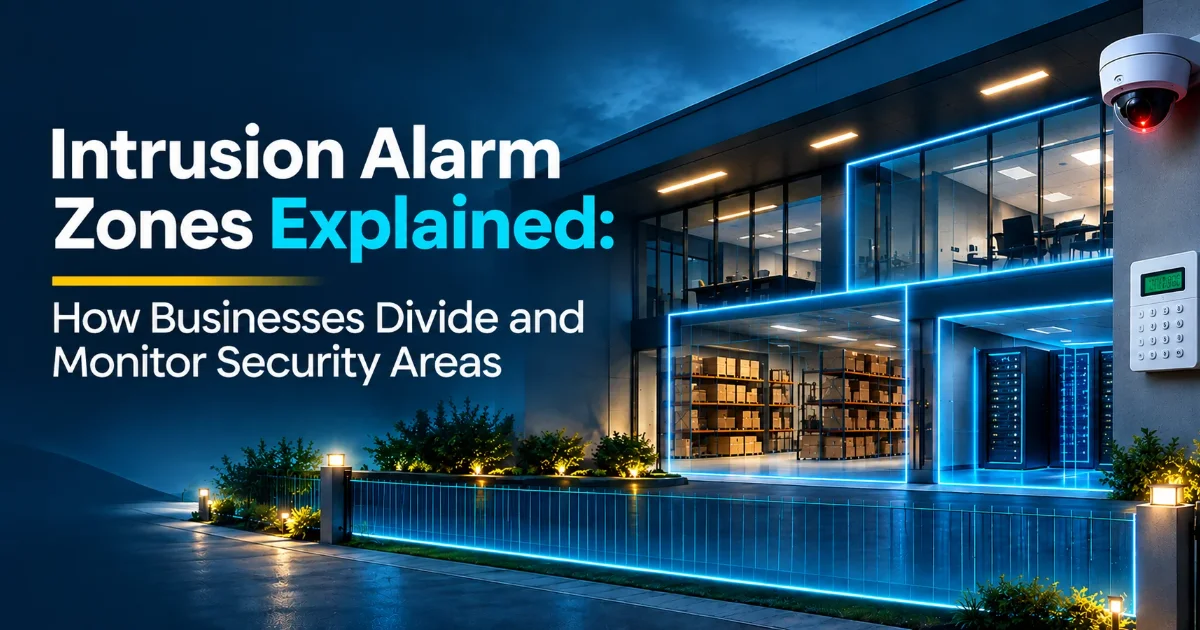
Intrusion alarm zones help businesses divide their properties into separate security areas for better monitoring and protection. A properly designed commercial intrusion alarm system helps detect suspicious activity, monitor restricted areas and respond quickly to potential security threats.
How Alarm Zoning Works in Commercial Security Systems
♦
Different areas such as entrances, offices, warehouses and restricted rooms are assigned separate alarm zones.
♦
Door contacts, window contacts and PIR motion sensors detect unauthorised entry or movement.
♦
The alarm control panel receives signals from sensors and identifies which zone has triggered an alarm.
♦
Sirens, strobes or remote monitoring alerts are activated when suspicious activity is detected.
♦
Businesses can arm or disarm selected zones without affecting other active security areas.
Different Types of Alarm Zones and Their Functions
Perimeter Zones
♦
Monitor external doors, windows and building entry points to detect unauthorised access.
Interior Zones
♦
Use PIR motion sensors to detect movement inside offices, warehouses and other indoor spaces.
Restricted Area Zones
♦
Protect server rooms, storage rooms, control rooms and other sensitive locations.
24-Hour Zones
♦
Continuously monitor critical areas and emergency conditions, even when the main alarm system is disarmed.
Entry and Exit Zones
♦
Provide a time delay for authorised employees to enter or leave the premises using security keypads.
Glass-Break Zones
♦
Detect the sound or vibration of breaking glass to identify possible forced entry.
How Businesses Divide and Monitor Security Areas
1. Divide the Property into Security Areas
♦
Separate the property into zones such as reception, offices, warehouses, parking areas and restricted rooms.
♦
Assign individual sensors to each area for accurate intrusion detection and easier monitoring.
2. Secure External Entry Points
♦
Install door and window contacts to monitor entrances, emergency exits and other vulnerable access points.
♦
Use perimeter intrusion detection to identify unauthorised entry before intruders reach internal areas.
3. Monitor Internal and Restricted Areas
♦
Install PIR motion sensors and glass-break detectors in offices, storage areas and sensitive locations.
♦
Apply additional security measures to server rooms, equipment rooms and areas containing valuable assets.
4. Enable Zone-Based Monitoring and Control
♦
Use alarm keypads and arming stations to control individual zones based on working hours and employee access requirements.
♦
Configure automated arming and disarming schedules to protect unused areas after business hours.
5. Integrate and Monitor Security Systems
♦
Integrate intrusion alarms with CCTV and access control systems for better visibility and video verification.
♦
Enable 24/7 alarm monitoring and remote mobile alerts to help security teams respond quickly to suspicious activity.
Common Configuration Challenges with Solutions
| Problem |
Solution |
| Incorrect sensor placement |
Conduct a property security assessment before installation. |
| Frequent false alarms |
Adjust sensor sensitivity and configure suitable detection areas. |
| Unclear zone identification |
Use descriptive labels such as Main Entrance, Warehouse and Server Room. |
| Limited system integration |
Integrate CCTV, access control and intrusion alarms where compatible. |
| Improper arming schedules |
Configure automated arming and disarming based on business operating hours. |
| Communication failures |
Use suitable backup power and communication options. |
Use Cases of Commercial Intrusion Alarm Zoning
♦
Office Buildings: Separate reception, meeting rooms, workspaces and server rooms into individual security zones.
♦
Warehouses: Monitor loading bays, storage sections, emergency exits and inventory areas.
♦
Retail Stores: Protect customer entrances, cash counters, stockrooms and display areas.
♦
Construction Facilities: Secure equipment storage, site offices, material storage and restricted access points.
♦
Facility Management Centres: Monitor control rooms, electrical rooms, equipment spaces and other critical operational areas.
♦
Commercial Buildings: Combine perimeter protection, interior intrusion detection and access control for comprehensive security monitoring.
Conclusion
A well-designed intrusion alarm zoning system helps businesses protect different areas of their properties through organised monitoring and faster threat detection. By combining suitable sensors, zone-based monitoring and security system integration, businesses can improve commercial property security and reduce false alarms.