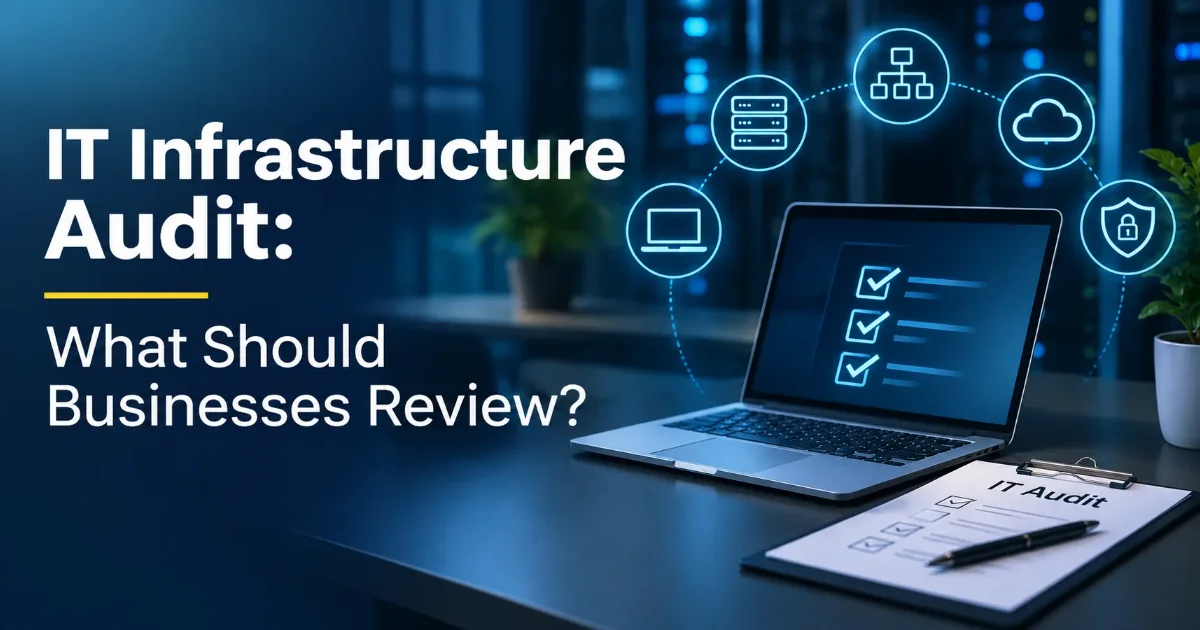
What Is an IT Infrastructure Audit?
An IT Infrastructure Audit is an in-depth examination of a company’s computer systems, networks, servers, hardware, and security to ensure that they are operating efficiently. This helps businesses identify risks within their systems, improve performance, and protect key business data.
What Should Be Checked?
Businesses should regularly check their IT infrastructure for vulnerabilities, obsolete systems, and incorrect configurations. This ensures a secure, reliable, and efficient IT infrastructure through an effective IT Infrastructure Audit in Dubai and throughout the UAE.
Hardware & Network Audit
Hardware and network audits help identify the current condition of a business's IT infrastructure.
Hardware Audit
Audit hardware such as computers, servers, storage, and other IT equipment to ensure they are performing well and are up to date.
Network Audit
Audit network hardware such as routers, switches, firewalls, and connections to identify performance or security issues.
Asset Management
Ensure that you maintain an up-to-date asset register for IT hardware, software, and network equipment.
Security
Identify unauthorized devices, poor configurations, and vulnerabilities within your network.
What Should Businesses Review During an IT Infrastructure Audit?
1. Network Infrastructure & Configuration Audit
Ensure businesses have a secure, stable network with proper configurations.
- ♦ Routers, switches, firewalls, and network connectivity.
- ♦ Identify network vulnerabilities, outdated firmware, and configuration issues.
- ♦ Ensure network access, monitoring, and performance are properly managed.
2. Server, Cloud & Storage Review
Servers, cloud infrastructure, and storage are essential for daily business operations. Regular reviews help prevent unexpected outages and data loss.
- ♦ Review server performance, operating systems, and configurations.
- ♦ Assess cloud infrastructure, storage, and resource utilization.
- ♦ Review enterprise storage, including SAN and NAS configurations.
3. IT Security & Access
IT security audits help businesses identify potential cybersecurity threats and weaknesses within their infrastructure.
- ♦ Review user accounts, administrator rights, and access permissions.
- ♦ Perform vulnerability checks on the infrastructure.
- ♦ Check firewalls, endpoint security, and security settings.
4. Backup and Disaster Recovery
A reliable backup and disaster recovery plan helps businesses recover quickly from unexpected outages and minimize operational downtime.
- ♦ Ensure backups are correctly scheduled and data is retained for the required time frames.
- ♦ Test data recovery procedures and verify that a disaster recovery plan is in place.
- ♦ Ensure business continuity plans are available to reduce downtime.
5. IT Compliance and Documentation
Ensure your business follows relevant security policies, regulations, and standards within its IT infrastructure.
- ♦ Review applicable UAE PDPL requirements, ISO 27001 standards, and DESC security standards.
- ♦ Ensure IT policies, infrastructure documentation, and security checks are in place.
- ♦ Maintain IT audit trails, asset registers, and risk assessments.
Conclusion
Conducting regular IT infrastructure audits can improve business security across the UAE. It also minimizes risks to IT systems and ensures business operations run efficiently. A structured audit highlights areas that need improvement and helps businesses plan future IT infrastructure upgrades.