Introduction
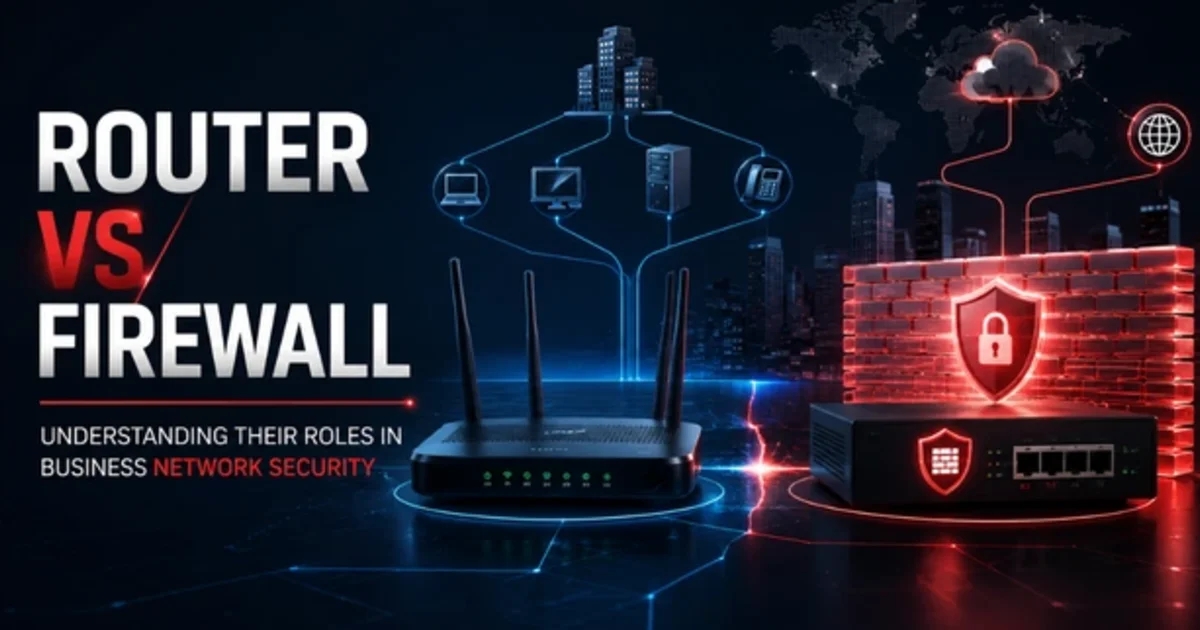
Routers and firewalls both help protect, and manage a business network, but they kind of do diff jobs. Like routers, basically move traffic along the way and choose the direction, while firewalls gate-keep the access, filtering what is allowed in and out. When you understand those roles, the business can set up a sturdier, and dependable network security strategy.
What is a Router?
So, a router kind of links multiple networks together, and it then sends data towards the right destination; you know where it belongs. It also allows businesses to manage their internet access, plus all that everyday internal network traffic, in a more orderly way. In short, it acts like a sort of intermediary guide, directing packets with a bit of patient routing logic.
What is a Firewall?
A firewall is this device that kind of watches network traffic and then blocks connections that are unauthorized or suspicious somehow. It gives an important layer of security, against a bunch of cyber threats that could happen.
Key Differences
| Feature | Router | Firewall |
|---|---|---|
| Main Role | Directs network traffic | Protects network traffic |
| Focus | Connectivity | Network Security |
| Traffic Control | Basic routing rules | Advanced security rules |
| Threat Protection | Limited | Stronger protection |
| Business Use | Connects devices and networks | Prevents unauthorized access |
Why Do Businesses Need Both?
Router: Gives dependable network connectivity and steers the traffic in the right direction.
Business Firewall: Helps control and sort incoming and outgoing traffic.
Network Security: Often relies on both in a sort of backup role, so protection and connection are stronger.
Router Security: When the router is set up properly it can keep unwanted access away, or at least reduce the chance.
Layered Protection: When you combine both, the overall defense gets sturdier; you end up with stronger coverage even if one point slips a bit.
Problems and Solutions
| Problem | Solution |
|---|---|
| Unauthorized network access | Configure strong firewall rules |
| Weak router passwords | Use strong passwords and change default credentials |
| Unnecessary open ports | Close unused ports and services |
| Suspicious network traffic | Monitor and filter traffic through the firewall |
| Outdated devices | Regularly update router and firewall firmware |
Conclusion
A router basically handles how the data actually moves between networks, while a firewall stands to guard over that traffic, from unauthorized access and other weird attempts. For most businesses you really need both, because without either thing, secure and reliable network operations can get messy or slow down a lot.