Structured Cabling vs Traditional Cabling: What Dubai Businesses Should Know
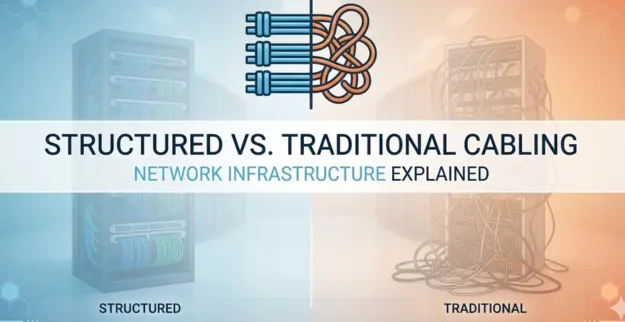
The digital landscape of today requires businesses to establish dependable network systems that can handle their expanding needs. The selection of an appropriate cabling system directly impacts the business's ability to operate without interruptions. The structured cabling system available in Dubai proves to be more beneficial for businesses because it provides better operational flexibility and enhanced performance capabilities and supports their future development needs when compared to traditional cabling methods.
What is Structured Cabling?
Structured cabling provides businesses with an organized network system which includes cables and connectors plus hardware components for their IT requirements, which encompass Internet access and data transmission and telephone service and security system operation. The method of structured cabling establishes a neat network design which requires less time and effort for businesses to proceed with installation and maintenance and upcoming system improvements when compared to using separate or unorganized cables for each device.
Key Components of Structured Cabling
- ♦ The backbone cabling system enables connection between various building spaces through its design, which links to different floor levels and building sections.
- ♦ Horizontal cabling connects workstations through its system of cables which extend across buildings.
- ♦ Patch panels serve to maintain organized cable management through their function of providing structured pathways for cable connections.
- ♦ The network equipment needs to be stored in network racks and cabinets which act as dedicated spaces for this purpose.
- ♦ The system consists of data outlets which serve as connection points and connectors which enable network link establishment.
- ♦ The system requires distinct cables for direct connections between all devices.
- ♦ The network experiences increased cable clutter through the addition of extra devices.
- ♦ The system becomes challenging for network administrators to handle while the network grows.
- ♦ The process of scaling becomes difficult when a business expands its operations.
- ♦ The office space suffers from two problems which include an excessive number of cables and an unorganized layout.
- ♦ The network system experiences greater risk of breakdown because of its current operational setup.
- ♦ The process of identifying network problems requires an extended period of time to complete.
- ♦ The solution cannot support current advanced IT infrastructure that exists in modern organizations.
- ♦ The system provides continuous high-speed data transmission throughout all network areas.
- ♦ The solution decreases the duration of network outages and improves link reliability.
- ♦ The organized cabling system enables faster troubleshooting processes.
- ♦ The process of repairs and maintenance work requires less time and resources because of the solution.
- ♦ The system enables straightforward integration of additional devices and systems.
- ♦ The system provides optimal performance for both current office expansion needs and upcoming system enhancement requirements.
- ♦ The solution decreases the need for repairs and replacements which happen on a regular basis.
- ♦ The system decreases operational interruptions which lead to increased costs of downtime.
- ♦ The system can manage data together with voice and CCTV and AV systems through a single network infrastructure.
- ♦ The system delivers an adaptable solution that businesses need to meet their current operational requirements.
What is Traditional Cabling?
The method of traditional cabling provides an unstructured approach for device connections through its use of separate cables which connect each system including computers and phones and cameras. The system fails to use a common design, which results in disorganized wiring patterns that make maintenance work and network expansion efforts and system upgrades more difficult.
1. Point-to-Point Cabling System
2. Limitations in Modern Businesses
Structured Cabling vs Traditional Cabling
| Feature | Structured Cabling | Traditional Cabling |
|---|---|---|
| System Type | Organized and standardized system | Point-to-point connection system |
| Scalability | Easy to expand and upgrade | Difficult to expand |
| Flexibility | Highly flexible for changes | Limited flexibility |
| Cable Management | Neat and well-organized | Messy and unorganized |
| Troubleshooting | Easy and fast | Time-consuming |
| Maintenance | Low maintenance | High maintenance |
| Performance | High and reliable performance | Less reliable |
| Cost (Long Term) | Cost-effective over time | Expensive in long run |
| Downtime | Minimal downtime | Higher downtime |
| Suitability | Ideal for modern businesses | Not suitable for growing businesses |