VMware vs Hyper-V: Which Virtualization Platform is Better for Dubai Enterprises?
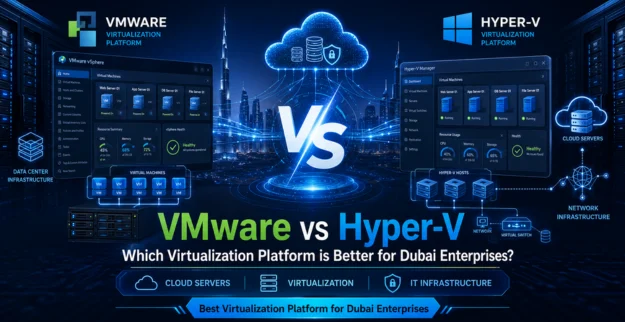
A bunch of businesses in Dubai are going for virtualization, cloud servers, and some more advanced IT infrastructure things, so they can ramp up performance and lower costs, plus keep business continuity in better shape overall. But choosing between VMware and Microsoft Hyper-V is kind of a big deal, especially for teams trying to build a secure, scalable, and efficient virtual environment for the everyday work that runs their business operations.
What is Virtualization?
Virtualization is sort of a technology that lets a business make several virtual servers or system instances on just one physical server. In practice it helps organizations get better use out of their resources, lower hardware expenses, boost flexibility, and make IT infrastructure management a bit less complicated, and it also supports improved performance, plus smoother business continuity.
What is VMware?
VMware is a well-known virtualization platform that is mostly used to create and handle virtual machines, plus some cloud setups too. It sort of helps companies get better server performance, cut downtime, and keep their IT infrastructure running in a more efficient way. In practice, it can feel fewer headaches, and more control overall.
What is Hyper-V?
Microsoft Hyper-V is a Microsoft virtualization tool that helps you create and operate multiple virtual machine instances on one physical server, sort of. It’s mostly used in Windows-based IT environments, you know. Practically speaking, it becomes a cost-efficient approach for watching over servers and the underlying infrastructure, and honestly it fits well when you need a finer command.
VMware vs Hyper-V Comparison
| Feature | VMware | Hyper-V |
|---|---|---|
| Platform Type | Enterprise virtualization platform | Microsoft virtualization platform |
| Performance | Excellent for large enterprise workloads | Good for medium to large workloads |
| Ease of Management | Advanced management tools | Simple Windows-based management |
| Scalability | Highly scalable | Scalable for most business environments |
| Integration | Supports multiple operating systems | Best with Microsoft ecosystem |
| Security Features | Advanced enterprise security | Strong Microsoft security integration |
| Disaster Recovery | Advanced recovery and backup features | Basic to advanced recovery options |
| Cost | Higher licensing cost | More cost-effective |
| Cloud Compatibility | Excellent hybrid cloud support | Strong Microsoft Azure integration |
| Best For | Large enterprises and data centers | Microsoft-based business environments |
VMware Use Cases
- ♦ With large enterprise data centers, you know the kind of heavy workloads.
- ♦ Multi-branch business environments, lots of locations need the same sort of stability.
- ♦ High-performance cloud servers, running at more speed under pressure.
- ♦ Advanced disaster recovery solutions, to keep the service alive even during outages.
- ♦ Large-scale virtualization projects, where consolidation is the whole point.
- ♦ Businesses requiring maximum uptime, basically near-stop reliability, is the goal.
Hyper-V Use Cases
- ♦ Small to mid-size business needs.
- ♦ Microsoft focused IT setups, where everything already runs on Windows.
- ♦ Budget aware virtualization efforts, not too costly.
- ♦ Windows Server backbone, the usual core.
- ♦ Office virtualization options, handy for day-to-day work.
- ♦ Easy cloud server rollout, quick and low friction.
Which Platform is Better for Dubai Enterprises?
Honestly, it depends on business size, IT goals, and what they already have running day to day. For some firms, the deciding factor is advanced enterprise virtualization, and bigger scale cloud infrastructure, so VMware might feel like the natural fit.
Other businesses—especially those leaning heavily into Microsoft environments—may find Hyper-V more suitable, mainly because it can be cost-effective for virtualization, and it tends to align well with the way Microsoft setups are built.
Now if you’re talking about construction companies, contracting firms, or facility management teams, they can still gain operational efficiency with either option, but it really comes down to having a correct IT strategy in place, not just picking a name.
When the virtualization environment is designed properly, it can help companies improve performance, cut operational costs, and strengthen their overall IT infrastructure reliability.
Conclusion:
VMware and Hyper-V both give dependable virtualization options for modern businesses, but honestly it depends on how your organization is growing, like do you need real scalability, or a tighter budget, and what about your security requirements, plus any cloud infrastructure goals you are aiming for.
In Dubai, picking up the right virtualization platform can help enterprises boost productivity, streamline cloud servers, and put in place a safer, more efficient IT environment.