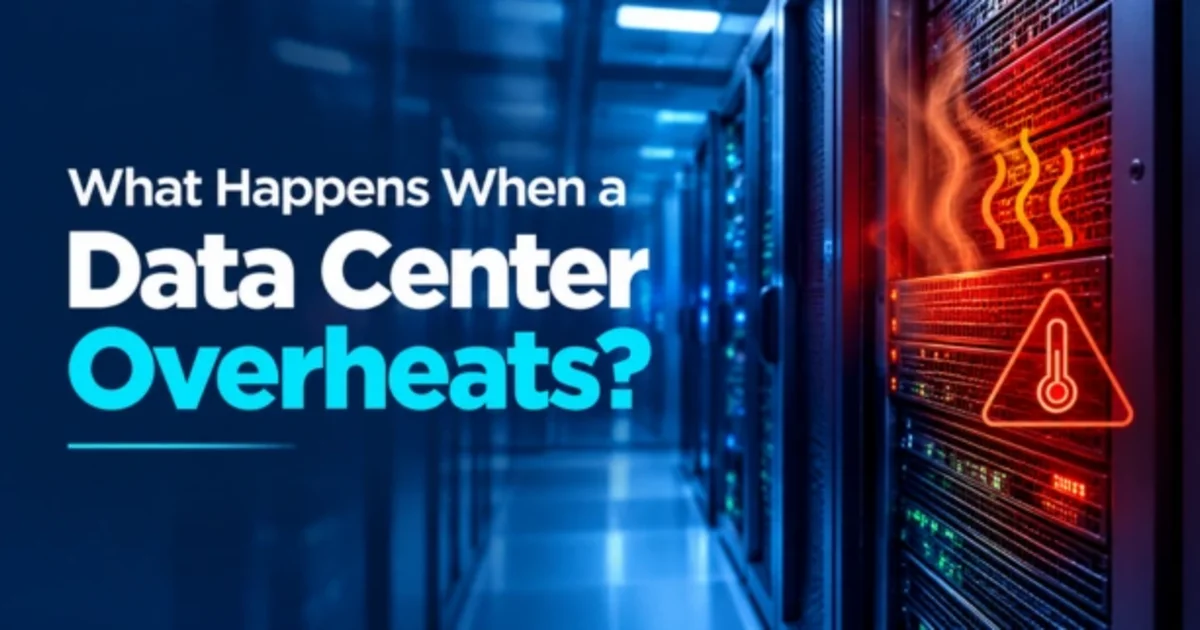
What Happens When a Data Center Overheats?
Introduction:
A data center depends on stable temperature and airflow to keep servers running safely and reliably. Data center overheating can cause performance issues, equipment damage, unexpected downtime, and costly business disruptions.
What Causes Data Center Overheating?
Data center overheating can happen because of several common environmental and infrastructure-related issues.
- ♦ Poor airflow or blocked ventilation
- ♦ Failure of cooling or air-conditioning systems
- ♦ Dust buildup in servers and cooling equipment
- ♦ Overloaded server racks generating excessive heat
- ♦ Poor rack layout or improper cable management
- ♦ High room temperature or inadequate cooling capacity
What Happens to Servers During Overheating?
1. Reduced Server Performance
- ♦ High temperatures can affect processor performance.
- ♦ Servers may automatically reduce processing speed.
- ♦ Applications can become slow or unresponsive.
2. Hardware Components Become Stressed
- ♦ CPUs and other components generate additional heat.
- ♦ Continuous heat exposure increases component stress.
- ♦ Hardware may experience a shorter operating life.
3. Unexpected Server Shutdowns
- ♦ Modern servers have thermal protection mechanisms.
- ♦ Systems may shut down when temperatures become unsafe.
- ♦ This can interrupt critical business applications and services.
4. Storage Systems Can Be Affected
- ♦ Excessive heat can affect storage hardware.
- ♦ Prolonged exposure may increase the risk of component failure.
- ♦ Storage failures can affect access to important business data.
5. Network Equipment May Fail
- ♦ Switches, routers, and firewalls also generate heat.
- ♦ Overheating can cause network devices to malfunction.
- ♦ Network interruptions can affect connected users and systems.
6. Cooling Systems Work Under More Pressure
- ♦ Higher temperatures increase the demand on cooling equipment.
- ♦ Cooling systems may need to run continuously to maintain safe conditions.
- ♦ Increased cooling demand can raise energy and operating costs.
7. Downtime Risk Increases
- ♦ Multiple overheated devices can create a chain of failures.
- ♦ Critical applications and services may become unavailable.
- ♦ Recovery may require emergency technical support.
8. Equipment Lifespan Can Be Reduced
- ♦ Repeated exposure to excessive heat accelerates hardware wear.
- ♦ Components may require replacement earlier than expected.
- ♦ This can increase maintenance and replacement costs.
Warning Signs of Data Center Temperature Problems
Businesses should watch for early warning signs that indicate potential temperature or environmental problems.
- ♦ Server room temperature rising above the normal operating range
- ♦ Frequent temperature or humidity alerts
- ♦ Unexpected server shutdowns or restarts
- ♦ Cooling equipment running continuously
- ♦ Hot spots around particular server racks
- ♦ Increasing hardware or network failures
How Data Center Monitoring Helps Prevent Failures
Effective data center monitoring provides continuous visibility into environmental conditions and critical IT infrastructure.
- ♦ Data center temperature monitoring helps identify temperature increases before they become critical.
- ♦ Data center environmental monitoring can track temperature, humidity, airflow, and other conditions.
- ♦ Real-time alerts notify IT teams about abnormal environmental changes.
- ♦ Historical data helps identify recurring hot spots and cooling issues.
- ♦ Regular monitoring supports preventive maintenance and reduces unexpected downtime.
Conclusion:
A well-controlled data center environment helps protect servers, network equipment, and critical business services from heat-related failures. Continuous data center monitoring and environmental checks help businesses identify problems early and maintain reliable IT operations.