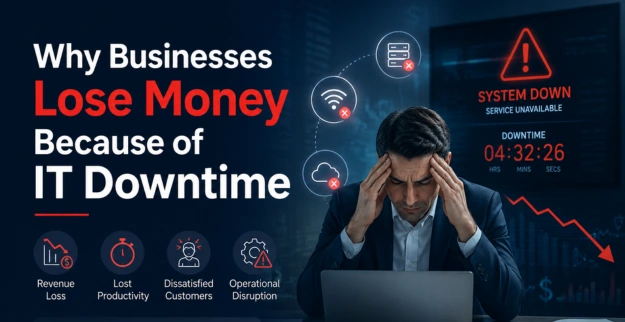
Why Businesses Lose Money Because of IT Downtime
05 August, 2026
Jai Krishnan
Introduction:
IT downtime can suddenly mess up business operations, set projects back, and
lower overall productivity. Even just a couple of minutes of downtime can
bring on financial losses, and make customers feel less satisfied.
Hidden Costs of IT Downtime
♦ You lose employee focus and overall productivity.
♦ Projects and day-to-day business moves get slowed down, sometimes in ways
no one predicts.
♦ Client follows ups get missed, and opportunities quietly slip away.
♦ Then there are extra repair and restoration expenses, on top of everything
else.
♦ And finally, your business image takes a hit, plus customer confidence gets
shaken.
Main Causes of IT Downtime:
1. Network Failures
♦ Sometimes slow, or plain unstable network connections mess with everyday
operations, you know.
♦ A weak network infrastructure really can lead to those surprising
interruptions, randomly it feels.
♦ No steady network monitoring means the risk of downtime climbs, even if
nothing looks wrong at first.
2. Hardware Failures
♦ Servers and devices can fail out of nowhere, like without warning at all.
♦ As hardware gets older, it can reduce system performance in a slow way.
♦ Also unexpected equipment breakdowns may stop business activities all at
once, and that’s a real problem.
3. Cybersecurity Threats
♦ Things like malware and ransomware attacks can mess up daily operations or
at least slow them down.
♦ Also unauthorized access can quietly compromise business data, and then
you’re stuck dealing with it.
♦ When security measures are weak, it tends to bring bigger financial risks
in its wake, sooner than expected.
4. Software Problems
♦ Old software can lead to compatibility headaches and, honestly, small,
weird breaks.
♦ When the system crashes, it can interrupt employee workflows, and people
end up waiting around.
♦ If software updates are missing, it may open up vulnerabilities, and
that’s not a simple annoyance; it can be a real risk.
5. Human Errors
♦ Wrong system setups can, maybe end up causing outages.
♦ If someone accidentally deletes key files, it really messes with
productivity.
♦ When employees have low IT awareness, it boosts operational risk, in a not
so good way.
6. Power and infrastructure Issues
♦ Power outages can mess up critical systems, and sometimes it’s not obvious
right away.
♦ Bad or not properly designed infrastructure planning affects business
continuity more than people think.
♦ If backup systems are insufficient, the recovery period gets longer and
the whole process becomes more tedious.
7. Lack of IT Maintenance
♦ When preventive maintenance is ignored, downtime increases, and usually
fast.
♦ If problems are spotted too late, the fixes get more expensive than they
should be.
♦ Weak IT oversight hits the whole business rhythm, basically lowering
general efficiency.
Prevention Strategies
♦ Start with proactive network monitoring, like keeping an eye on things
before they go sideways.
♦ Schedule regular IT maintenance, and also software updates when they’re
due, not whenever someone remembers.
♦ Keep dependable data backup setups and disaster recovery plans in place,
so recovery is less of a scramble.
♦ Train employees on cybersecurity best practices, even if it feels
repetitive; it matters.
♦ Use business continuity solutions to reduce disruptions and keep
operations steady.
♦ Work together with experienced IT support providers, because handling
everything in-house can get pricey and slow.
Benefits of Managed IT Services
♦ You get 24/7 watching, plus quicker fixing stuff when something goes
sideways.
♦ Better cybersecurity safeguards, and stronger data protection in practice.
♦ Less downtime, and often lower day-to-day operational expenses.
♦ More steady business flow, plus improved productivity.
♦ Scalable IT helps when the company starts to grow and keeps growing.
♦ More dependable network performance, along with routine system
maintenance, without headache.
Conclusion:
IT downtime can really, in some way, mess up business productivity and
profitability. If a company puts money into proactive IT management, it tends
to keep things running smoothly and it helps them stay competitive.